Whales are among the largest and most remarkable animals on Earth. These marine mammals live in oceans around the world, from warm tropical waters to the cold seas surrounding the poles.
Life Beneath the Surface
Although whales spend their lives in water, they breathe air through blowholes located on top of their heads. They must regularly return to the surface to breathe before diving again in search of food or traveling through the ocean.
Whales are warm-blooded, give birth to live young, and nurse their calves with milk. A thick layer of fat called blubber helps protect them from cold water and stores energy during long migrations.
Two Main Groups
Whales are generally divided into baleen whales and toothed whales. Baleen whales filter small animals from the water using flexible plates inside their mouths. This group includes blue whales, humpback whales, and gray whales.
Toothed whales use teeth to catch fish, squid, and other prey. Many of them also use echolocation, producing sounds and listening for returning echoes to understand their surroundings. Sperm whales, belugas, and orcas belong to this group.
The Blue Whale
The blue whale is the largest known animal to have ever lived. An adult can grow longer than a city bus and weigh well over one hundred tonnes. Despite its enormous size, it feeds mainly on tiny crustaceans called krill.
Communication and Migration
Whales communicate using clicks, whistles, pulses, and complex songs. Some sounds can travel across great distances underwater. Humpback whales are especially famous for their long, patterned songs.
Many species migrate thousands of kilometres each year. They often feed in cold, nutrient-rich waters before traveling to warmer regions where they mate and give birth.
Protecting Whales
Commercial hunting once caused severe declines in many whale populations. Today, whales also face threats from fishing gear, ship collisions, underwater noise, pollution, and changes to ocean ecosystems.
Conservation programs, safer fishing practices, protected habitats, and international cooperation can help whale populations recover. Protecting whales also supports healthier oceans because these animals play an important role in marine food webs and nutrient cycles.
Registration of Births and Deaths (Amendment) Bill, 2026 Passed in Lok Sabha
The Registration of Births and Deaths (Amendment) Bill, 2026 was passed by the Lok Sabha on Friday amid continued protests by Opposition members over the alleged police crackdown on students during a recent protest march. Due to repeated disruptions in the House, the Bill was approved without any detailed debate before being passed by a voice vote.
The legislation seeks to amend the existing law governing the registration of births and deaths in India. The government says the amendments are intended to strengthen the registration system and improve the efficiency of maintaining vital records across the country.
Why Was the Registration of Births and Deaths (Amendment) Bill Passed Without Debate?
Parliament proceedings remained disrupted throughout the day as Opposition MPs continued protesting against the alleged police action on students during the July protest march to Parliament. Members raised slogans and demanded a government response, leading to repeated interruptions in the Lok Sabha.
Despite the protests, the government proceeded with its legislative agenda and passed the Registration of Births and Deaths (Amendment) Bill, 2026 without discussion. The Opposition objected to the move, arguing that important legislation should be debated in Parliament before being approved.
The Bill was one of several pieces of legislation taken up during the Monsoon Session despite the continuing political deadlock.
Registration of Births and Deaths (Amendment) Bill 2026 – What the Bill Aims to Do
The Registration of Births and Deaths (Amendment) Bill, 2026 proposes changes to the legal framework governing the official registration of births and deaths in India.
According to the government, the amendments are aimed at:
Strengthening the civil registration system.
Improving the accuracy and maintenance of birth and death records.
Streamlining administrative procedures related to registration.
Enhancing the efficiency of record management.
The detailed implementation of the amendments will follow the legal and administrative process after the Bill completes the remaining stages required for it to become law.
Political Reactions and Next Steps
The passage of the Bill came against the backdrop of intense political confrontation in Parliament. While the government maintained that legislative business should continue despite disruptions, Opposition parties criticized the decision to clear the Bill without discussion.
Following its approval in the Lok Sabha, the Bill will move through the remaining constitutional process before the proposed amendments come into effect.
The development highlights the continuing political tensions during the Monsoon Session, where several important Bills have been considered amid repeated protests and adjournments.
Conclusion
The Registration of Births and Deaths (Amendment) Bill, 2026 marks another significant legislative development during the ongoing Monsoon Session of Parliament. While the government believes the amendments will improve India’s birth and death registration framework, the Bill’s passage without debate has drawn criticism from the Opposition.
As the legislative process continues, the final impact of the amendments will become clearer once the Bill completes all constitutional formalities and the detailed implementation framework is notified
Commenting on the quarterly performance, Mr. Anand Roy, CEO & Managing Director, said the company’s strong start to FY27 reflects disciplined execution, sustainable growth, and improved underwriting profitability.
He emphasized that Star Health will continue investing in:
Digital capabilities
Artificial Intelligence
Distribution expansion
Customer experience
Prudent risk selection
The company aims to build a resilient, digital-first health insurance business capable of creating long-term value for both policyholders and shareholders.
Star Health Insurance Delivers Strong Q1 FY27 Results with Growth Across Premiums, Profit and Digital Business
Star Health and Allied Insurance Company Limited, India’s largest standalone health insurance company, has announced a strong financial performance for the first quarter of FY27 (April–June 2026). The company’s unaudited financial results reflect healthy premium growth, significant improvement in underwriting profitability, better claims performance, and accelerated digital transformation.
The insurer reported Gross Written Premium (GWP) of ₹4,287 crore, representing a 19% year-on-year growth, while Fresh Retail Health GWP increased 37% YoY to ₹730 crore, highlighting continued demand for retail health insurance products.
Under Ind AS accounting standards, Star Health reported Profit After Tax (PAT) of ₹550 crore, registering 25% YoY growth, while its normalised PAT stood at ₹386 crore, reflecting a 44% increase compared to the same quarter last year.
Star Health Insurance Strengthens Financial Performance in Q1 FY27
Star Health delivered one of its strongest quarterly performances by maintaining disciplined underwriting and improving operating efficiency.
Q1 FY27 Financial Highlights (Unaudited)
Gross Written Premium (GWP): ₹4,287 Crore (19% YoY Growth)
Fresh Retail Health GWP: ₹730 Crore (37% YoY Growth)
Normalised Profit After Tax (PAT): ₹386 Crore (44% YoY Growth)
Profit After Tax (Ind AS): ₹550 Crore (25% YoY Growth)
Underwriting Profit: ₹111 Crore (compared with ₹16 Crore in Q1 FY26)
Combined Insurance Service Ratio (CISR): 97.0% (improved from 98.7%)
The company attributed this growth to disciplined underwriting, strong premium collections, improved operational efficiency, and better portfolio management.
Star Health Insurance Enhances Customer Trust Through Strong Claims Performance
Claims settlement remains one of the company’s biggest strengths.
During the first quarter of FY27:
9.6 lakh claims were settled
Retail Claims Settlement Ratio improved to 91%
Persistency increased to 102%
Company Net Promoter Score (NPS) improved to 65
These indicators reflect increasing customer confidence, improved policy renewals, and better customer satisfaction.
Star Health has also settled more than one crore claims since inception, making it India’s first health insurance company to achieve this milestone.
According to the company’s official claims dashboard, claims worth more than ₹6.15 lakh crore have been settled since inception, highlighting its large-scale claims handling capability.
Digital Transformation Drives Star Health Insurance Growth
Technology continues to play a crucial role in Star Health’s long-term strategy.
During Q1 FY27:
97% of fresh policies were sourced digitally
The company’s Digital Direct-to-Customer (D2C) channel contributed 16% of fresh retail sales
Digital D2C business recorded an impressive 142% year-on-year growth
The company continues investing heavily in AI-powered customer services and advisor productivity tools.
ATOM PRO AI Platform Improves Advisor Productivity
Star Health’s proprietary AI-powered platform ATOM PRO continues to witness increasing adoption across its advisor network.
The platform offers:
Intelligent product recommendations
Instant premium quotations
Policy comparison
Network hospital search
Business dashboards
Digital servicing capabilities
ATOM PRO was recently recognized at the Economic Times BFSI FinNext Awards 2026 under the category “InsurTech Product Excellence of the Year.”
AI and Technology Continue to Improve Customer Experience
Artificial Intelligence has become a major pillar of Star Health’s digital strategy.
The company has deployed AI and Machine Learning across several business functions, including:
Claims processing
Fraud analytics
Customer servicing
Underwriting
Operational efficiency
Star Health is also working on integrating Generative AI into its operations through global technology partnerships to further improve customer outcomes.
Star Health Customer App Sees Rapid Growth
The company’s digital ecosystem continues to expand rapidly.
According to the latest update:
14.7 million app downloads
More than 1.5 million monthly active users
Customers increasingly use the mobile application Star Health APP for:
Digital renewals
Claim submissions
Wellness services
Self-service policy management
Distribution Network Continues to Expand Across India
Star Health continues strengthening its nationwide presence.
As of 30 June 2026, the company operates through:
900+ branch offices
8.5 lakh+ insurance agents
16,000+ network hospitals
18,500+ employees
This extensive distribution network enables Star Health to provide health insurance services across metropolitan cities as well as Tier-II and Tier-III markets.
‘Talk to Star’ Initiative Simplifies Hospitalisation Planning
To further enhance customer convenience, Star Health has introduced the “Talk to Star“ service.
Eligible policyholders can receive expert guidance before planned hospitalization or home healthcare.
The service assists customers in understanding:
Policy coverage
Cashless hospitalization process
Network hospitals
Required documentation
Care pathways before admission
In addition, non-policyholders can access 24×7 free Virtual OPD consultations through the Star Health Customer App, demonstrating the company’s broader commitment to accessible healthcare.
Future Outlook
With rising healthcare awareness, increasing medical costs, and growing demand for health insurance, Star Health believes India offers significant long-term growth opportunities.
The company’s strategy remains focused on:
Retail health insurance expansion
AI-driven innovation
Digital customer engagement
Better claims management
Operational efficiency
Sustainable profitability
These initiatives are expected to strengthen Star Health’s leadership position in India’s standalone health insurance industry.
Conclusion
Star Health Insurance has delivered a strong start to FY27 by combining healthy premium growth, improved profitability, better claims performance, and rapid digital transformation. The company’s continued investments in AI, customer service, digital platforms, and nationwide distribution demonstrate its commitment to making quality health insurance more accessible across India.
With a robust financial position, strong customer trust indicators, and a clear digital-first strategy, Star Health Insurance remains one of the most influential players in India’s growing health insurance sector.
Disclaimer
The financial information and business performance mentioned in this article are based on the unaudited financial results of Star Health and Allied Insurance Company Limited for the quarter ended 30 June 2026, as officially released by the company. Final audited figures may differ.
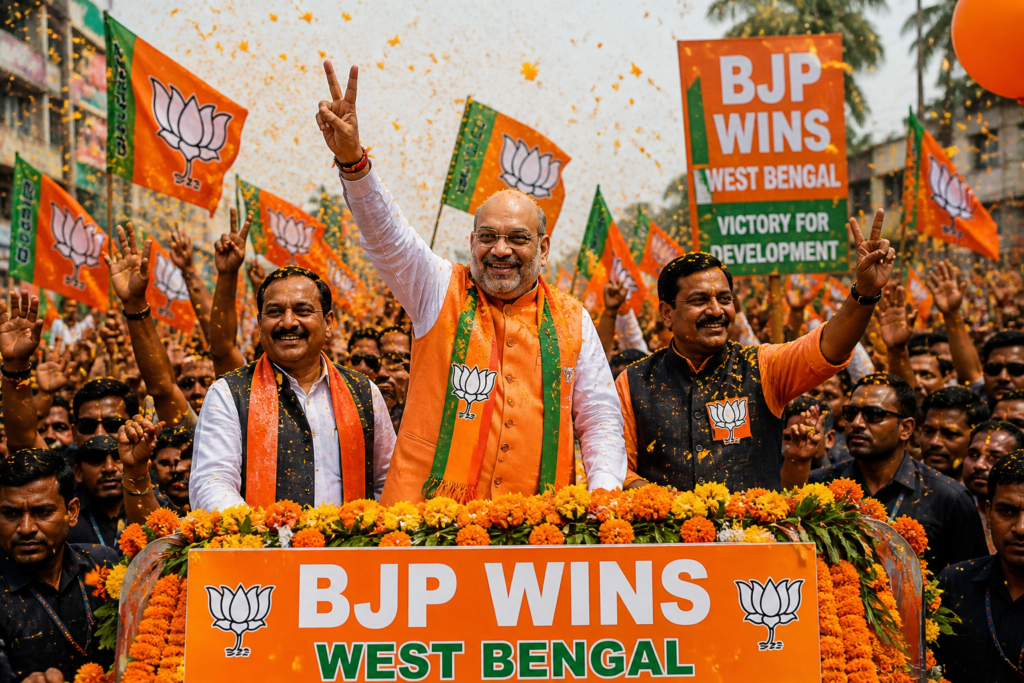
West Bengal BJP Victory – A Historic Political Turning Point
In a dramatic and closely watched electoral battle, the Bharatiya Janata Party (BJP) has secured a major victory in West Bengal, marking a historic shift in the state’s political landscape. For decades, West Bengal politics has been dominated by the All India Trinamool Congress (TMC) under the leadership of Mamata Banerjee.
This election result reflects changing voter aspirations, a desire for governance reform, and the growing influence of national political narratives in a state traditionally driven by regional parties.
Key Factors Behind BJP Winning in West Bengal
1. Strong Organizational Expansion
The BJP significantly strengthened its grassroots network across West Bengal. Booth-level management, local outreach, and consistent campaigning helped the party connect directly with voters.
2. Central Leadership Influence
The party leveraged its national leadership through rallies and public engagement. Messaging focused on development, welfare schemes, and governance improvements.
3. Anti-Incumbency Against TMC
After years of rule, sections of voters expressed dissatisfaction over governance issues, corruption allegations, and administrative challenges, contributing to a shift in voter sentiment.
4. Development-Focused Campaign
The BJP emphasized infrastructure, employment, and investment, presenting itself as a party capable of accelerating economic growth in the state.
5. Changing Voting Patterns
This election saw a shift in traditional voting patterns, with BJP gaining support in both urban and rural regions.
Election Results and Political Impact in West Bengal
Seat Distribution and Growth
The BJP recorded a significant increase in both vote share and seat count, expanding its presence across key constituencies.
Impact on TMC
The defeat represents a major challenge for TMC, likely leading to internal restructuring and strategic changes.
National Political Impact
The victory strengthens BJP’s position in eastern India and reinforces its national dominance.
What This Victory Means for West Bengal’s Future
Governance Changes
The new government is expected to prioritize infrastructure, industry, and administrative reforms.
Economic Opportunities
Potential growth areas include manufacturing, investment inflow, and tourism development.
Social Impact
Policy changes in education, welfare, and cultural initiatives may reshape the social landscape.
Challenges Ahead
The BJP government must address unemployment, maintain law and order, and fulfill electoral promises.
Public Reaction and Expert Analysis
Public response has been mixed:
Supporters celebrate a new phase of development
Critics express concerns about policy direction
Experts highlight a major shift in political dynamics
High voter turnout and strong campaign strategies made this election a turning point.
The BJP’s victory in West Bengal marks a significant transformation in the state’s political journey. It reflects evolving voter expectations and the growing role of national politics in regional landscapes.
The coming years will determine whether this political change translates into real development and improved governance for the people of West Bengal.
ITI Business Cycle Fund NFO review — Explore ITI Business Cycle Fund investment strategy, features, risk factors, returns potential, and whether ITI Business Cycle Fund is a good mutual fund investment in 2026.
ITI Business Cycle Fund NFO Overview – Complete Guide to ITI Business Cycle Fund
The ITI Business Cycle Fund NFO has recently entered the mutual fund market as a thematic equity scheme designed to capitalize on economic and business cycles. The ITI Business Cycle Fund aims to generate long-term capital appreciation by investing in sectors that benefit from different economic phases such as expansion, slowdown, recovery, and peak growth.
Unlike traditional diversified equity funds, the ITI Business Cycle Fund NFO focuses on sector rotation strategies. This means the fund manager adjusts investments depending on economic conditions, helping investors potentially benefit from changing market cycles.
Key details of the ITI Business Cycle Fund include:
NFO launch period: February 2026
Benchmark index: Nifty 500 TRI
Minimum investment: Lump sum or SIP option available
Category: Thematic equity mutual fund
Investment horizon: Recommended long-term
Because economic cycles constantly evolve, funds like the ITI Business Cycle Fund attempt to capture growth opportunities across multiple sectors over time.
ITI Business Cycle Fund Investment Strategy – How ITI Business Cycle Fund Works
The primary investment approach of the ITI Business Cycle Fund NFO is based on analyzing macroeconomic indicators and identifying business cycle phases. The fund manager reallocates investments accordingly.
Expansion Phase Strategy
During economic expansion:
Banking and financial stocks may perform well
Infrastructure and capital goods sectors grow
Consumption demand increases
The ITI Business Cycle Fund may increase exposure to cyclical sectors in such conditions.
Slowdown Phase Strategy
When economic slowdown appears:
Defensive sectors like FMCG, healthcare, and utilities gain importance
Stable earnings companies are preferred
This helps reduce volatility risks.
Recovery Phase Strategy
Economic recovery phases often see:
Manufacturing growth
Technology sector revival
Investment activity improvement
The ITI Business Cycle Fund NFO aims to capture early recovery opportunities.
This flexible allocation approach differentiates the ITI Business Cycle Fund from traditional equity mutual funds.
Benefits of Investing in ITI Business Cycle Fund NFO
Investors considering the ITI Business Cycle Fund should understand its potential advantages.
Diversification Across Sectors
Since the fund invests based on economic cycles, it spreads investments across multiple industries rather than focusing on one sector.
Professional Fund Management
Experienced managers monitor economic indicators, interest rates, inflation trends, and corporate earnings before making decisions.
Long-Term Wealth Creation Potential
Equity funds historically provide strong returns over long investment horizons. The ITI Business Cycle Fund NFO targets similar long-term growth.
Flexible Investment Options
Investors can choose:
SIP investment for disciplined savings
Lump sum investment for immediate exposure
This flexibility makes the ITI Business Cycle Fund suitable for various investor profiles.
Risks and Considerations Before Investing in ITI Business Cycle Fund
While the ITI Business Cycle Fund NFO offers growth potential, investors should evaluate associated risks.
Market Volatility Risk
Equity markets fluctuate due to economic, geopolitical, and financial factors.
Sector Rotation Timing Risk
Incorrect timing of economic cycle changes may affect fund performance.
Thematic Fund Concentration
Thematic funds like the ITI Business Cycle Fund may experience higher volatility compared to diversified funds.
Long-Term Commitment Required
Experts usually recommend a 3–5 year horizon when investing in funds like the ITI Business Cycle Fund.
Who Should Invest in ITI Business Cycle Fund?
The ITI Business Cycle Fund NFO may be suitable for:
Investors with moderate to high risk tolerance
Long-term wealth creation seekers
Investors comfortable with thematic funds
SIP investors looking for disciplined equity exposure
Conservative investors should carefully assess risk before investing.
Market Outlook for ITI Business Cycle Fund
Economic trends influencing the ITI Business Cycle Fund include:
Interest rate cycles
Inflation levels
Global economic recovery
Corporate earnings growth
Technology and infrastructure expansion
If economic growth continues steadily, funds focused on business cycles may benefit.
Final Verdict: Should You Invest in ITI Business Cycle Fund NFO?
The ITI Business Cycle Fund NFO provides a thematic investment opportunity focusing on economic cycle-based sector allocation. With professional management, diversified sector exposure, and potential long-term growth, it can be a strategic addition to an equity portfolio.
However, since thematic funds carry higher volatility, investors should:
✔ Assess financial goals carefully ✔ Maintain a long-term perspective ✔ Consider diversification with other mutual funds ✔ Consult financial advisors if unsure
Overall, the ITI Business Cycle Fund may suit investors willing to take calculated risks for potential long-term returns.
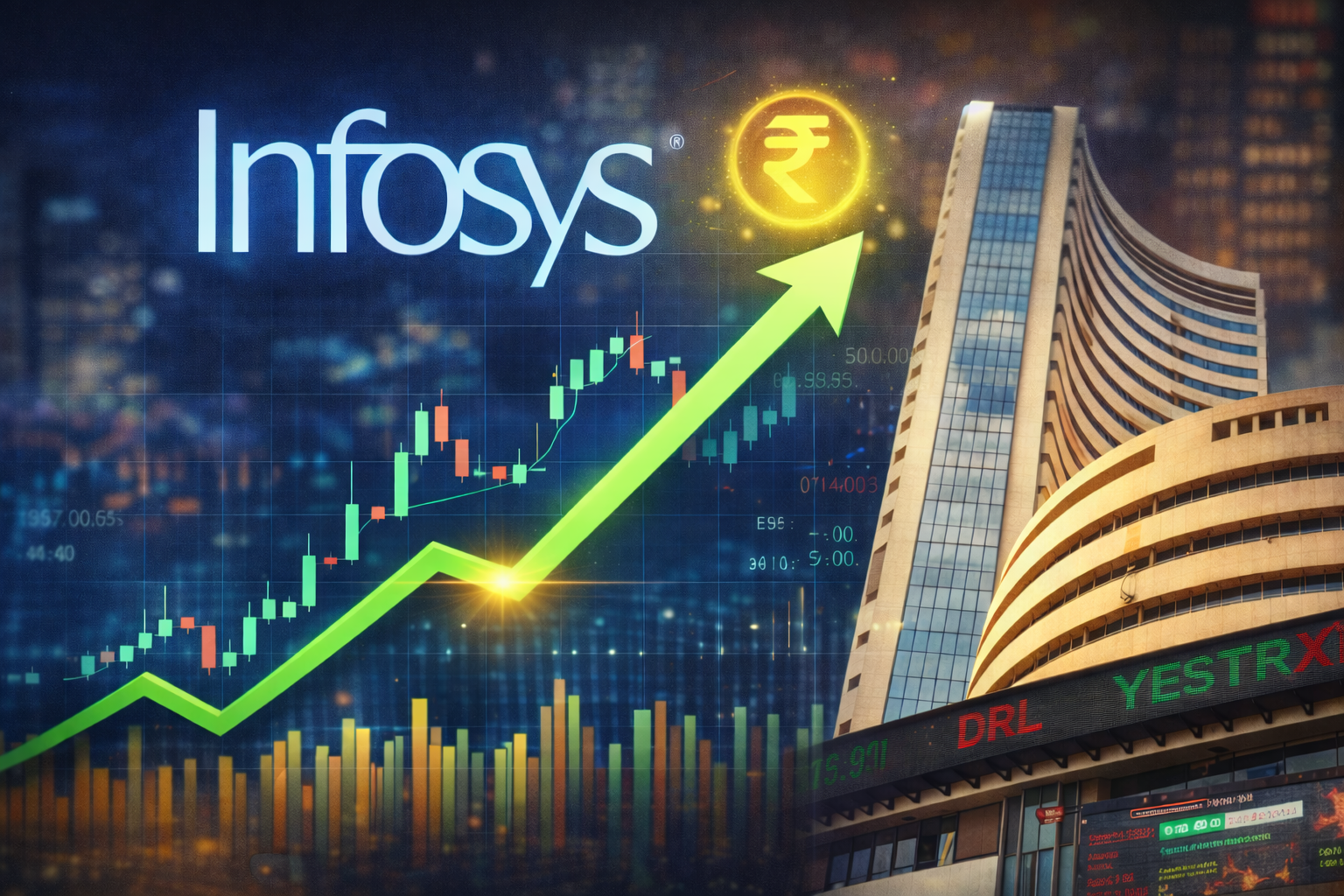
Infosys shares remained in focus today as the Indian stock market saw recovery after early weakness. The IT giant’s stock showed positive movement supported by sector recovery, investor buying, and recent developments related to artificial intelligence partnerships. Here is a detailed SEO-friendly article on Infosys stock opening today and its current performance based on latest market updates.
Infosys Share Price Today Opening and Current Stock Performance
Infosys share price today opened around ₹1,370 per share, showing a stable start compared to the previous closing price. During intraday trading, the stock touched a high near ₹1,406–₹1,411 and a low around ₹1,366–₹1,367, reflecting moderate volatility typical in technology stocks.
By late morning trading:
Stock was trading roughly around ₹1,400+ range
Gains of approximately 2–3% were seen compared to the previous close
Buying interest increased after recent IT sector recovery
Analysts attribute the upward momentum partly to renewed investor confidence in IT stocks and company-specific developments.
Why Infosys Stock Is Rising Today
1. AI Partnership Driving Sentiment
Infosys shares gained after announcing collaboration with AI firm Anthropic to develop enterprise artificial intelligence solutions. This partnership boosted investor confidence in future growth prospects.
Market reports suggest the stock even climbed about 3% during trading sessions following the announcement.
2. IT Sector Recovery
The broader IT sector rebounded after recent declines, helping Infosys stock move upward. Gains in IT stocks offset early market losses and supported overall indices.
Technology stocks had previously faced pressure due to global economic concerns and AI-related industry disruption fears.
3. Strong Investor Buying
Heavy buying in blue-chip companies like Infosys helped stock markets recover from early losses today. This indicates investor confidence in large, stable companies.
Infosys Company Strength and Financial Position
Infosys remains one of India’s leading IT companies with strong fundamentals:
Market capitalization above ₹5.5 lakh crore
Healthy dividend yield around 3%
Strong return on equity track record
Focus on AI, cloud computing, and digital transformation
These factors keep the company attractive for long-term investors.
Recent Challenges for Infosys Stock
Despite today’s positive movement, Infosys has faced challenges recently:
Global IT demand slowdown concerns
AI disruption fears affecting IT companies
Short-term volatility in tech stocks
Reports noted IT stocks had recently declined significantly before recovering.
Expert Outlook on Infosys Stock
Market experts suggest:
Positive Factors
✔ AI and digital transformation growth ✔ Strong client base globally ✔ Consistent financial performance
Overall, analysts expect moderate growth with periodic volatility.
Should Investors Watch Infosys Stock Now?
For investors:
Short-Term Traders
Expect price fluctuations
Track IT sector news closely
Long-Term Investors
Infosys remains fundamentally strong
AI initiatives may support future growth
Diversified investing remains advisable.
Infosys stock today opened stable around ₹1,370 and moved upward during trading, supported by IT sector recovery and AI partnership news. The stock currently trades in the ₹1,400 range with moderate gains. While short-term volatility continues, Infosys remains a strong long-term player in the global IT services sector.
Investors should monitor market trends, company announcements, and global technology developments before making investment decisions.
Investing wisely has become essential in today’s fast-changing financial world. Among the most popular investment options, mutual fund and SIP (Systematic Investment Plan) stand out as reliable tools for long-term wealth creation. Whether you are a beginner investor or someone planning financial growth, understanding mutual funds and SIP can help you make better money decisions.
This SEO-friendly article explains what mutual funds and SIP are, their benefits, how they work, and why they are considered smart investment strategies.
What is Mutual Fund and SIP? Understanding the Basics
A mutual fund is an investment vehicle where money from multiple investors is pooled together and invested in stocks, bonds, or other financial assets by professional fund managers. Instead of buying individual shares, investors get units of a diversified portfolio.
SIP (Systematic Investment Plan) is a method of investing in mutual funds where a fixed amount is invested regularly — monthly, quarterly, or weekly. It allows investors to build wealth gradually without needing a large lump sum.
Key Features of Mutual Funds
Professionally managed investments
Diversification reduces risk
Accessible to small investors
Different types available (equity, debt, hybrid)
Key Features of SIP
Regular disciplined investment
Affordable entry (even small amounts)
Rupee cost averaging benefit
Ideal for long-term goals
Benefits of Investing in Mutual Fund and SIP
1. Wealth Creation Over Time
Mutual funds, especially equity funds, have historically provided good returns over the long term. SIP helps investors stay consistent and benefit from market growth.
2. Power of Compounding
When returns are reinvested, your investment grows faster. SIP works best when maintained for years, allowing compounding to build wealth steadily.
3. Risk Diversification
Since mutual funds invest in multiple assets, the risk is spread across various securities instead of relying on a single stock.
4. Affordable Investment Option
You don’t need a large amount to start. Many SIP plans allow investments starting from very small monthly contributions.
5. Professional Fund Management
Experienced fund managers research markets and make investment decisions, which benefits investors without financial expertise.
Types of Mutual Funds Suitable for SIP Investment
Equity Mutual Funds
Invest mainly in stocks and suitable for long-term growth. Higher risk but potentially higher returns.
Debt Mutual Funds
Invest in bonds and fixed-income securities. Lower risk compared to equity funds.
Hybrid Funds
Combination of equity and debt instruments. Balanced risk and return potential.
Index Funds
Track specific market indices. Low cost and passive investment approach.
How SIP Helps Manage Market Volatility
Market ups and downs are normal. SIP helps reduce risk through:
Rupee Cost Averaging: You buy more units when prices are low and fewer when high.
Consistency is more important than timing the market.
Common Mistakes to Avoid in SIP Investment
Stopping SIP during market downturns
Expecting quick returns
Choosing funds without research
Ignoring diversification
Not reviewing investments regularly
Avoiding these mistakes improves long-term results.
Tax Benefits of Mutual Fund and SIP
Certain mutual funds offer tax advantages:
ELSS funds provide tax deductions under applicable laws.
Long-term capital gains may have tax benefits depending on regulations.
Always check current tax rules before investing.
Mutual Fund vs SIP: Key Difference
Many people confuse these terms:
Mutual Fund
SIP
Investment product
Investment method
Lump sum or SIP possible
Regular installment investment
Managed portfolio
Strategy for investing gradually
Simply put, SIP is a way to invest in mutual funds systematically.
Future of Mutual Fund and SIP Investment
With increasing financial awareness, digital platforms, and easy online access, mutual funds and SIP investments are growing rapidly. Experts expect continued expansion as more people adopt disciplined investment habits.
Technology, mobile apps, and AI-based advisory tools are also making investing simpler and more transparent.
Conclusion
Mutual fund and SIP investment provide a practical and effective way to grow wealth over time. They combine professional management, diversification, affordability, and disciplined investing — making them suitable for both beginners and experienced investors.
Starting early, staying consistent, and maintaining a long-term perspective are key factors for successful investment outcomes. While market risks exist, proper planning and patience can help investors achieve financial security.
The question “Did Salman Khan clear Rajpal Yadav’s ₹9 crore debt?” has recently gained significant traction across social media, news portals, and entertainment discussions. Bollywood fans and followers are curious to know whether superstar Salman Khan financially helped actor Rajpal Yadav in a legal debt case that once made headlines. Viral claims, online speculation, and incomplete information have fueled this trending topic, making it important to separate fact from rumor.
In this SEO-friendly article, we explore the background of the alleged ₹9 crore debt case, clarify whether Salman Khan had any involvement, and examine why such celebrity rumors often spread so quickly online.
Rajpal Yadav ₹9 Crore Debt Case — What Actually Happened
To understand the viral claim properly, it is essential to revisit the original legal situation involving actor Rajpal Yadav. The popular Bollywood comedian faced legal issues several years ago related to a financial dispute connected with film production funding.
Reports at the time indicated:
Rajpal Yadav had taken financial assistance reportedly linked to a film production project.
A dispute arose over repayment of approximately ₹9 crore.
Legal proceedings followed, which eventually resulted in court action and a brief jail term associated with contempt-of-court issues rather than a criminal conviction related directly to fraud.
The case received media attention because Rajpal Yadav is a well-known actor recognized for his comic roles in Bollywood films. However, it is important to note that legal matters involving financial disputes are not uncommon in the film industry, where production budgets, loans, and partnerships can sometimes lead to disagreements.
Despite the seriousness of the situation, official records and credible news reports did not mention Salman Khan as someone who cleared the debt or intervened financially. Much of the current discussion appears to stem from speculation rather than documented fact.
The viral claim suggesting that Salman Khan paid Rajpal Yadav’s ₹9 crore debt seems largely unsupported by verified evidence. No official statements from Salman Khan, Rajpal Yadav, legal representatives, or reliable media outlets confirm such financial assistance.
Why People Believe the Claim
Several factors contribute to the spread of this rumor:
1. Salman Khan’s Generous Public Image Salman Khan is widely known for charitable work and helping people within and outside the film industry. Because of this reputation, many fans easily assume he might have helped a fellow actor financially.
2. Social Media Amplification Platforms like Instagram, YouTube, Facebook, and X (formerly Twitter) often circulate sensational claims quickly. Even unverified information can go viral within hours.
3. Mixing Old News with New Speculation Sometimes older legal cases resurface online without full context, leading people to create new assumptions or narratives.
No Verified Financial Link
As of now:
No credible financial documents confirm Salman Khan cleared any debt for Rajpal Yadav.
No official legal confirmation exists linking Salman Khan to the repayment.
Major news outlets have not published verified reports supporting this claim.
Therefore, it is safest to consider this story a viral rumor rather than confirmed fact.
Salman Khan and Rajpal Yadav: Professional Relationship
Both actors are part of the Bollywood industry but have largely maintained separate professional paths. While Salman Khan has worked with many actors and is known for supporting certain projects, there is no documented long-term financial or business association between him and Rajpal Yadav.
This makes the ₹9 crore debt payment claim even less likely without strong supporting evidence.
Current Status of the Case
Rajpal Yadav has continued his acting career following past legal issues. He remains active in Bollywood films, web series, and entertainment projects. Meanwhile, Salman Khan continues to dominate Bollywood with films, television appearances, and philanthropic initiatives.
No recent credible legal updates suggest ongoing financial involvement between the two actors.
Kedarnath Dham portals will open on April 22 at 8 AM, officially marking the beginning of the Char Dham Yatra 2026 pilgrimage season in Uttarakhand. The announcement was made by officials of the Badrinath-Kedarnath Temple Committee (BKTC), bringing joy and anticipation among devotees across India and abroad who eagerly wait every year for the sacred Himalayan pilgrimage to begin.
Located in the Rudraprayag district of Uttarakhand, Kedarnath Dham is one of the holiest Hindu shrines dedicated to Lord Shiva and forms an important part of the Char Dham circuit that includes Yamunotri, Gangotri, Kedarnath, and Badrinath. Every year, lakhs of pilgrims travel to these shrines seeking spiritual blessings, peace, and divine connection.
Kedarnath Temple Opening Date Confirmed
According to BKTC officials, the portals of Kedarnath Temple will open on April 22, 2026, at 8 AM following traditional rituals and Vedic ceremonies. The opening of the temple doors signifies the start of the Char Dham Yatra season, which usually continues until late autumn before winter snowfall makes access difficult.
BKTC Chairman Hemant Dwivedi extended warm greetings to devotees in India and overseas and confirmed that preparations for the pilgrimage season have already begun. He stated that with the Kedarnath opening date finalized, authorities are accelerating arrangements to ensure a smooth and safe pilgrimage experience for visitors.
He also highlighted that the portals of Badrinath Dham will open on April 23, one day after Kedarnath, further energizing the Char Dham pilgrimage atmosphere in Uttarakhand.
Preparations for Char Dham Yatra 2026 in Full Swing
Officials have indicated that extensive preparations are underway for the upcoming yatra season. The Badrinath-Kedarnath Temple Committee has started inspecting infrastructure such as guest houses, pilgrim facilities, administrative offices, and logistical arrangements.
BKTC Chief Executive Officer Vijay Prasad Thapliyal stated that preliminary inspections have already begun, and primary preparations for the pilgrimage season have largely been completed. Efforts are being made to improve facilities including accommodation, sanitation, medical support, transportation coordination, and security measures.
Authorities are focusing on ensuring the safety and comfort of pilgrims, especially considering the high altitude, challenging weather conditions, and difficult trekking routes associated with Kedarnath.
Panchmukhi Doli Procession Schedule Announced
A key spiritual highlight before the opening of Kedarnath Temple is the traditional Panchmukhi Doli procession, which carries the symbolic five-faced idol of Lord Shiva from its winter abode to Kedarnath.
The official schedule announced includes:
April 18: Ritual worship of Bhairavnath at Ukhimath
April 19: Doli departs from Omkareshwar Temple to Phata
April 20: Halt at Gaurikund
April 21: Arrival at Kedarnath Dham
April 22: Opening of Kedarnath Temple portals
This sacred procession is deeply significant for devotees and marks the spiritual transition from winter worship locations to the main Kedarnath shrine.
Importance of Kedarnath Dham in Hindu Religion
Kedarnath Temple holds immense religious significance in Hinduism. It is one of the twelve Jyotirlingas of Lord Shiva and is believed to grant liberation and spiritual purification to devotees who undertake the pilgrimage with devotion.
Situated at an altitude of about 3,583 meters (11,755 feet), the temple is surrounded by snow-capped Himalayan peaks, offering a serene and spiritually uplifting environment. The challenging trek to Kedarnath is often considered an act of faith and dedication.
According to mythology, the temple is associated with the Pandavas from the Mahabharata, who sought Lord Shiva’s blessings after the Kurukshetra war.
Spiritual Experience of Kedarnath Yatra
For many pilgrims, visiting Kedarnath is not just a journey but a deeply emotional and spiritual experience. The scenic Himalayan landscapes, sacred chants, temple rituals, and collective devotion create a powerful atmosphere that leaves a lasting impression on visitors.
Devotees often describe the pilgrimage as transformative, offering mental peace, spiritual clarity, and renewed faith.
Environmental Responsibility During Yatra
Authorities and environmental groups are increasingly urging pilgrims to maintain ecological responsibility while visiting the fragile Himalayan region. Key recommendations include:
Avoid plastic waste
Respect local ecology
Follow designated trekking routes
Support sustainable tourism practices
Protecting the natural environment ensures that future generations can continue to experience the sacred beauty of Kedarnath.
Expectations for Char Dham Yatra 2026
With the confirmed opening date of April 22, excitement among devotees is steadily growing. Travel bookings, accommodation arrangements, and tour planning have already begun across India.
Officials expect higher participation due to improved facilities, better connectivity, and growing interest in spiritual tourism. Religious organizations and tour operators are preparing special pilgrimage packages to accommodate the anticipated surge in visitors.
Gold has always held a special place in the global economy, acting not only as a precious metal for jewelry and cultural traditions but also as a critical financial asset. The gold price continues to attract attention from investors, economists, and common consumers alike because it reflects economic stability, inflation fears, geopolitical tensions, and currency movements. In recent years, fluctuations in the gold price have intensified due to global uncertainties, changing interest rates, and evolving investment patterns.
This detailed news report explores the latest trends in gold price movements, factors affecting prices, and expectations for the future. Whether you are an investor, jeweler, policymaker, or simply someone interested in financial news, understanding gold price dynamics can help you make informed decisions.
Gold Price Market Overview – Current Gold Price Trends Worldwide
The global gold price has experienced significant volatility over the past few years. Economic recovery after pandemics, geopolitical conflicts, inflation concerns, and central bank policies have all contributed to fluctuating prices. Traditionally seen as a safe-haven asset, gold attracts investors when stock markets become uncertain.
Current International Situation
Across major financial hubs such as London, New York, Dubai, and Mumbai, gold price trends reflect both global and regional demand. In India, one of the largest consumers of gold, prices often rise during wedding seasons and festivals such as Diwali, Akshaya Tritiya, and regional celebrations.
Demand Patterns
Gold demand generally falls into three main categories:
Jewelry demand: Particularly strong in Asia and the Middle East.
Investment demand: Includes ETFs, gold bars, and coins.
Central bank purchases: Many countries buy gold reserves to strengthen their financial security.
Recent reports indicate central banks worldwide are increasing gold holdings to diversify reserves away from volatile currencies. This trend has supported higher gold prices globally.
Inflation Hedge Role
One of the strongest reasons behind gold price stability is its reputation as an inflation hedge. When inflation rises, currencies lose purchasing power, prompting investors to move toward gold. This pattern has been visible during economic crises throughout history.
Currency Impact
The value of the US dollar strongly influences gold price movements. Typically:
Strong dollar → lower gold prices
Weak dollar → higher gold prices
This inverse relationship occurs because gold is priced globally in dollars.
Gold Price Historical Trends and Price Graph Analysis
Historical data shows that gold price growth has not been linear but cyclical. Several global events have caused sharp increases or declines.
Long-Term Historical Perspective
1970s inflation era: Gold prices surged due to economic instability.
2008 financial crisis: Investors shifted heavily to gold.
These cycles demonstrate gold’s resilience during crises.
Short-Term Fluctuations
Daily and monthly fluctuations often depend on:
Interest rate changes
Oil prices
Stock market performance
Political developments
For instance, when central banks raise interest rates, gold prices sometimes decline because fixed-income investments become more attractive.
Regional Variations
Gold price differences between countries occur due to:
Import duties and taxes
Currency exchange rates
Local demand supply balance
India, for example, often sees slightly higher prices due to import duties and strong cultural demand.
Technological Influence
Modern trading platforms, algorithmic trading, and instant global communication have accelerated price movements. News spreads quickly, causing rapid buying or selling.
Gold Price Future Outlook – Predictions, Investment Insights and Economic Impact