
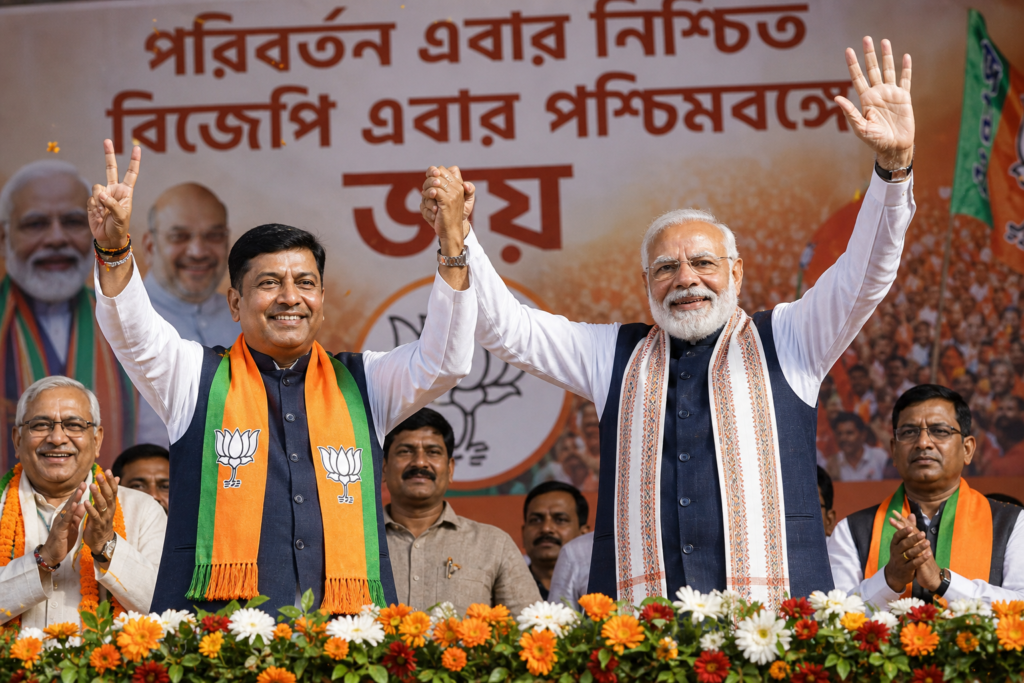
West Bengal BJP Victory – A Historic Political Turning Point
In a dramatic and closely watched electoral battle, the Bharatiya Janata Party (BJP) has secured a major victory in West Bengal, marking a historic shift in the state’s political landscape. For decades, West Bengal politics has been dominated by the All India Trinamool Congress (TMC) under the leadership of Mamata Banerjee.
This election result reflects changing voter aspirations, a desire for governance reform, and the growing influence of national political narratives in a state traditionally driven by regional parties.
Key Factors Behind BJP Winning in West Bengal
1. Strong Organizational Expansion
The BJP significantly strengthened its grassroots network across West Bengal. Booth-level management, local outreach, and consistent campaigning helped the party connect directly with voters.
2. Central Leadership Influence
The party leveraged its national leadership through rallies and public engagement. Messaging focused on development, welfare schemes, and governance improvements.
3. Anti-Incumbency Against TMC
After years of rule, sections of voters expressed dissatisfaction over governance issues, corruption allegations, and administrative challenges, contributing to a shift in voter sentiment.
4. Development-Focused Campaign
The BJP emphasized infrastructure, employment, and investment, presenting itself as a party capable of accelerating economic growth in the state.
5. Changing Voting Patterns
This election saw a shift in traditional voting patterns, with BJP gaining support in both urban and rural regions.
Election Results and Political Impact in West Bengal
Seat Distribution and Growth
The BJP recorded a significant increase in both vote share and seat count, expanding its presence across key constituencies.
Impact on TMC
The defeat represents a major challenge for TMC, likely leading to internal restructuring and strategic changes.
National Political Impact
The victory strengthens BJP’s position in eastern India and reinforces its national dominance.
What This Victory Means for West Bengal’s Future
Governance Changes
The new government is expected to prioritize infrastructure, industry, and administrative reforms.
Economic Opportunities
Potential growth areas include manufacturing, investment inflow, and tourism development.
Social Impact
Policy changes in education, welfare, and cultural initiatives may reshape the social landscape.
Challenges Ahead
The BJP government must address unemployment, maintain law and order, and fulfill electoral promises.
Public Reaction and Expert Analysis
Public response has been mixed:
- Supporters celebrate a new phase of development
- Critics express concerns about policy direction
- Experts highlight a major shift in political dynamics
High voter turnout and strong campaign strategies made this election a turning point.
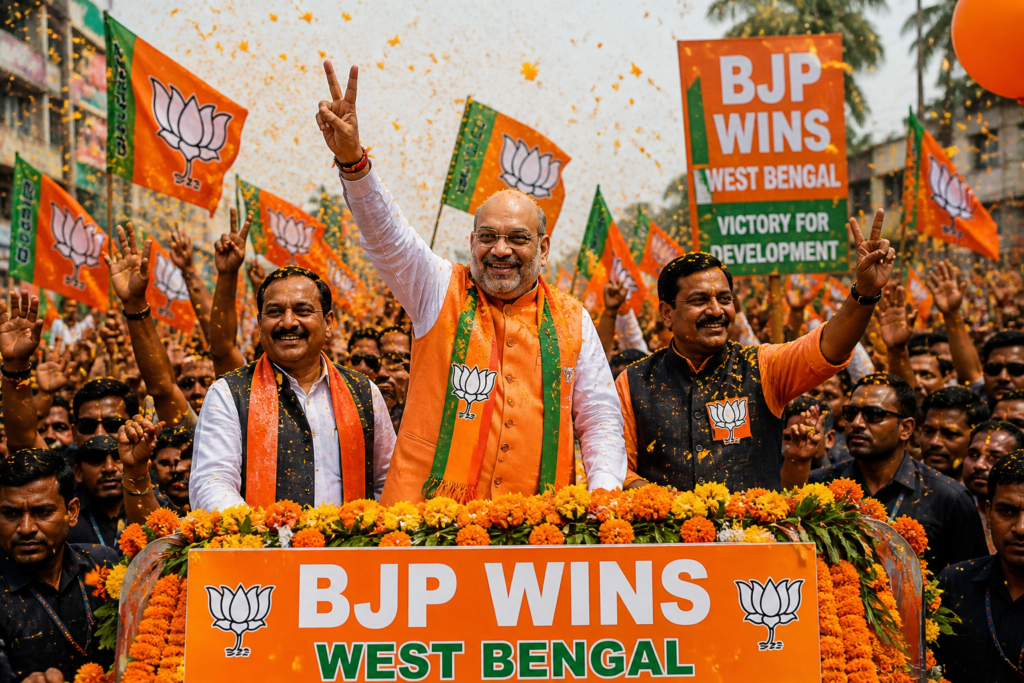
The BJP’s victory in West Bengal marks a significant transformation in the state’s political journey. It reflects evolving voter expectations and the growing role of national politics in regional landscapes.
The coming years will determine whether this political change translates into real development and improved governance for the people of West Bengal.